Old audio recordings hold something photographs and videos can’t quite capture — the actual sound of a voice, a laugh, or a moment in time. A cassette tape of your grandmother reading a bedtime story, a reel-to-reel recording of a wedding toast, or a home-recorded interview with a family member who has since passed away — these are irreplaceable. But tape doesn’t last forever. Over the years, it picks up hiss, loses clarity, warps, and sometimes stops playing altogether. That’s where audio restoration comes in, and why it matters far more than most people realize until it’s too late. It’s also why so many families begin their search with a simple phrase like audio transfer service near me, hoping to find someone local who can save a recording before it’s gone for good.
What Audio Restoration Actually Involves
Audio restoration is the process of taking a damaged or degraded recording and cleaning it up so it sounds close to how it originally did — or better. This isn’t just about transferring a tape to a digital file. Raw transfers often carry over every flaw the original tape has: hiss, pops, crackle, muffled vocals, and uneven volume. Restoration goes a step further, using specialized equipment and careful manual work to remove unwanted noise while keeping the natural voice and sound intact. Done properly, it should never sound artificial or robotic — the goal is always to preserve the authenticity of the original recording, not replace it with something synthetic.
Common Problems With Old Audio Recordings
Every analog format breaks down differently, but a few problems show up again and again when families bring in decades-old tapes and reels.
Hiss and Background Noise
Hiss is one of the most common issues with cassette tapes and reel-to-reel recordings. It builds up from the magnetic tape itself, from repeated playback, and from the recording equipment used at the time. Left untouched, hiss can bury quiet voices or make an entire recording exhausting to listen to. Restoration work reduces this noise layer by layer, without stripping away the natural tone of the voice underneath it.
Distortion and Warping
Heat, humidity, and age cause tape to stretch, warp, or become brittle. This shows up as pitch changes, wobbling sound, or a recording that seems to speed up and slow down on its own. Vinyl records suffer from a similar issue — warping from improper storage leads to skips and pitch instability during playback. Correcting this requires equipment that can stabilize playback speed and, in some cases, frame-by-frame audio correction.
Dropouts and Skips
Dropouts happen when sections of a tape lose their magnetic coating or become damaged, causing brief moments of silence or garbled sound. On vinyl, scratches and dust cause similar skips and pops. Restoration specialists work through these gaps carefully, often cross-referencing surrounding audio to minimize the disruption without altering the original content.
Why Cassette Tapes and Reel-to-Reel Recordings
Degrade Over Time
Magnetic tape was never built to last a century. The tape itself is coated with tiny magnetic particles that hold the recorded sound, and over decades, that coating weakens, flakes, or sticks together — a problem often called “sticky shed syndrome.” Reel-to-reel tapes, microcassettes, and standard cassettes are all vulnerable to this, especially if they’ve been stored in attics, basements, or garages where temperature and humidity swing throughout the year. Once a tape reaches a certain point of decay, playback can permanently damage it further, or it may simply stop playing at all. This is exactly why timing matters — a tape that plays fine today might not play at all in five more years.
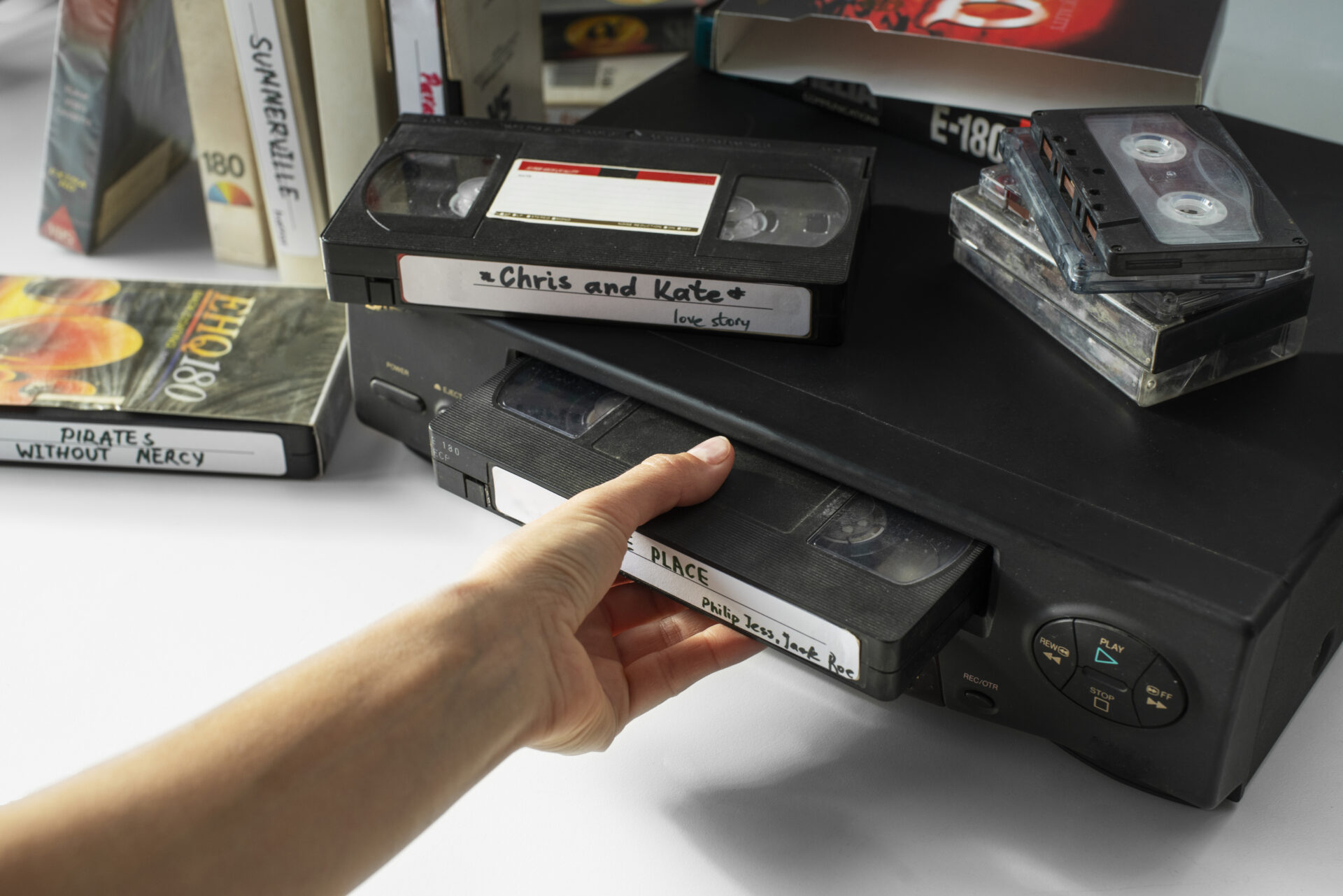
The machines themselves add another layer of urgency. VCRs, reel-to-reel players, and cassette decks aren’t being manufactured anymore, and the ones still working are aging right along with the tapes they play. Repair parts are increasingly hard to find, and technicians who know how to service this older equipment are becoming rarer every year. A working player today isn’t guaranteed to still be working, or even findable, a decade from now, which makes the equipment side of the problem just as pressing as the condition of the tape itself.
The Restoration Process Explained
Professional audio restoration typically follows a careful, multi-step approach rather than a single quick fix. The exact steps can vary depending on the format and condition of the original media, but the process generally includes:
- Inspecting the tape or record for physical damage before any playback is attempted
- Cleaning and, when needed, gently baking tapes affected by sticky shed syndrome so they can be safely played
- Transferring the audio using calibrated, professional-grade equipment suited to the original format
- Reducing hiss, hum, and background noise using specialized audio software
- Correcting pitch and speed inconsistencies caused by tape warping or stretching
- Balancing volume levels so quiet passages aren’t lost and loud ones aren’t harsh
- Reviewing the final file against the original to confirm the voice and sound stayed true to the source
Each of these steps takes time, patience, and the right tools. Rushing any part of this process is usually what leads to restorations that sound thin, hollow, or artificial.
Who Actually Needs Audio Restoration
It’s easy to assume audio restoration is only for musicians or radio archives, but most requests actually come from everyday families and small businesses. Parents want to save recorded messages from children who are now grown adults. Adult children want to hear a parent’s voice again after they’ve passed. Churches and community groups have boxes of reel-to-reel sermons and events that were never digitized. Local businesses sometimes hold onto old training tapes, radio ads, or recorded meetings that still carry useful or sentimental value.
This shows up in cassette tapes holding a child’s first words or a school play, in old answering machine tapes carrying a message from someone who has since passed, in reel-to-reel recordings from weddings or religious services, in vinyl records of a family member singing at home, and in business archives or training recordings that were never moved off outdated formats. Each of these situations shares the same underlying problem: the original format is aging, and playback equipment is becoming harder to find with each passing year.
Why You Shouldn’t Wait to Restore Your Audio
Every year that passes, analog tape continues to degrade — even if it’s sitting untouched in a closet. Hiss gets worse, magnetic particles continue to break down, and the machines capable of playing older formats become harder to find and repair. Many people searching for an audio transfer service near me are doing so because a tape has already started skipping or sounding muffled, and they’re worried it won’t play much longer. Waiting rarely improves the situation. The earlier a recording is restored, the more of the original sound quality can realistically be recovered.
What to Look for in an Audio Transfer Service
Not every transfer service handles restoration the same way, and the difference shows up in the final result. When people search for an audio transfer service near me, it helps to know what separates a basic tape-to-digital conversion from real restoration work.
A service worth choosing should be able to explain what equipment they use for playback, whether they inspect and repair tapes before transferring them, and what specific noise reduction and correction steps are included. It’s also worth asking whether the original media is returned safely afterward, and what file formats and delivery options are available once the work is complete. A provider that only offers a flat, no-questions transfer without any cleanup is unlikely to produce a recording that sounds meaningfully better than the original tape.
Price matters too, but it shouldn’t be the only factor. A cheap transfer that skips cleaning, calibration, and noise reduction can leave you with a digital file that carries every flaw the original tape had, plus new problems introduced by rushed or careless handling. Someone typing audio transfer service near me into a search bar is usually looking for a local provider they can trust with something irreplaceable, not just the lowest price on a conversion. Reading reviews, asking how long the provider has been working with analog formats, and understanding their process before dropping off a tape can save a lot of disappointment later.
Common Questions About Audio Restoration
People bringing in old tapes and records for the first time often have similar questions before they commit to the process. How much of the original hiss can actually be removed, whether a badly warped tape can be saved at all, and how long the entire process takes are among the most frequent. In most cases, hiss and background noise can be reduced significantly without harming the voice or music underneath it, though the amount of improvement depends on how much damage the original tape has already suffered. Warped or brittle tapes often need special handling, sometimes including a gentle baking process, before they can be played safely even once. Turnaround time varies by format and by how much restoration work a particular recording needs, so it’s worth asking for a timeframe upfront rather than assuming every job takes the same amount of time.
How Archive Life Media Approaches Audio Restoration
At Archive Life Media, every recording is treated as a piece of family or business history, not just a file to be converted. Cassette tapes, microcassettes, reel-to-reel recordings, and vinyl records are inspected individually before any transfer begins, since each format and each tape has its own condition and quirks. From there, the team works through cleaning, calibrated playback, and noise reduction, adjusting the process based on what each recording actually needs rather than applying the same settings to everything.
This is part of why so many people searching for an audio transfer service near me in the Bloomington area end up working with Archive Life Media directly — the process is built around care and attention to the original recording, not speed alone. Once the restoration is complete, files are delivered in the format that works best for how they’ll be used, whether that’s for sharing with family, archiving for a business, or simply keeping a safe digital backup of something that can’t be recreated.
Preserving Voices and Sounds That Can’t Be Replaced
There’s a difference between preserving a photograph and preserving a voice. A photo shows what someone looked like. A recording lets you hear how they laughed, how they told a story, how they said your name. That’s what makes audio restoration matter so much — it’s not just about fixing noise and hiss for the sake of sound quality. It’s about making sure a voice from decades ago is still clear enough to recognize, still warm enough to feel familiar, for as long as the digital file exists.
If you have tapes, reels, or records sitting in storage, waiting won’t make them easier to restore. Every year adds more wear, more hiss, and more risk that the tape simply won’t play. Archive Life Media’s team can look at what you have, walk you through what restoration would involve, and get started before any more of that sound is lost.
The tapes sitting in your closet won’t wait, and neither should you. Set up a time to bring your recordings in or ship them over, and let’s get them saved before another year of wear passes. Reaching out now, while the tape can still be played, is the single best way to make sure those recordings survive for the next generation to hear.