
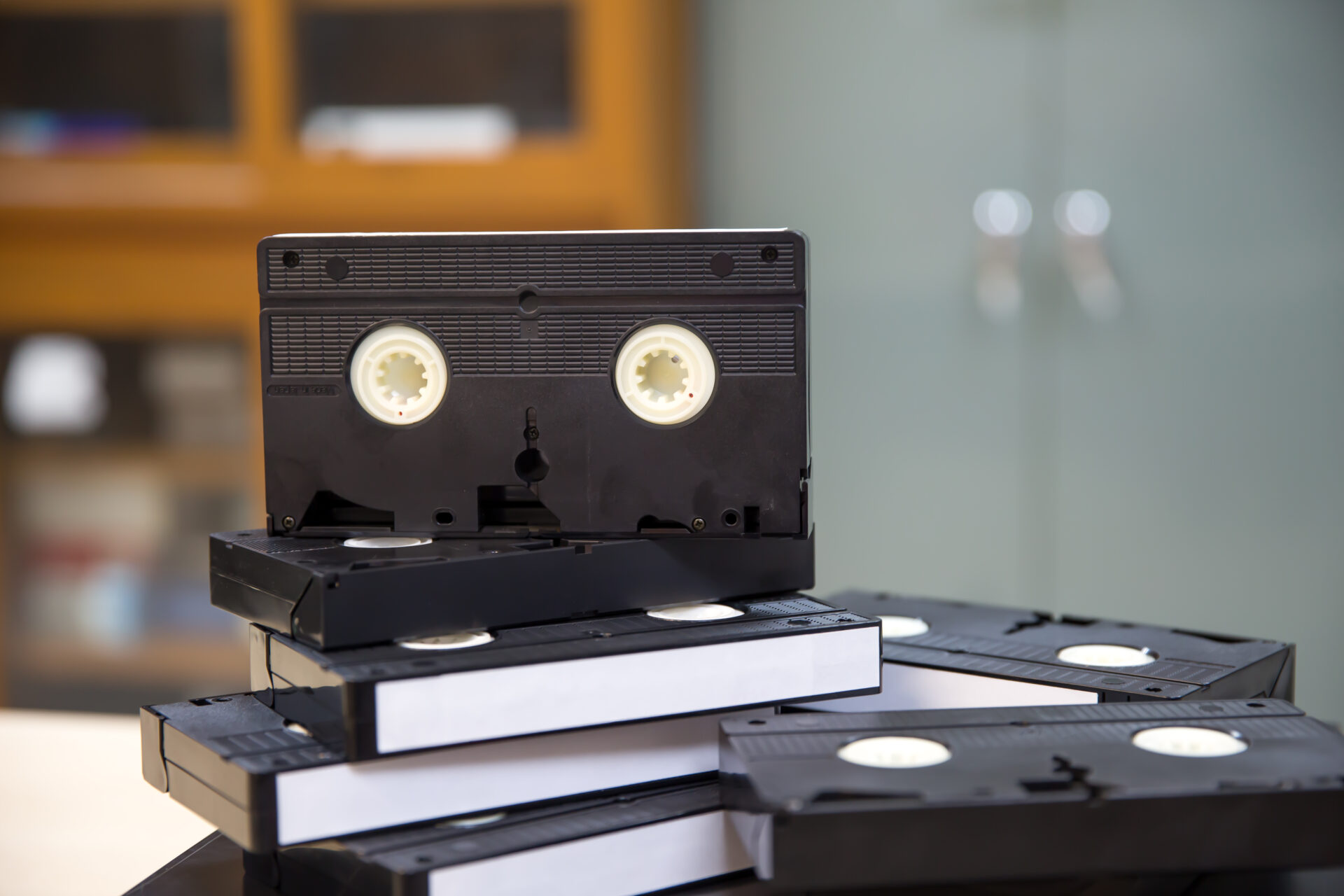
Every VHS tape has a shelf life, and it’s shorter than most people assume. A tape sitting in a closet doesn’t look like it’s changing from one year to the next, but underneath the plastic shell, a slow chemical process is already working against it. Understanding what’s actually happening inside that cassette explains why so many families and businesses are finally moving their old tapes into digital form before it’s too late.
What a VHS Tape Is Actually Made Of
A VHS tape isn’t a single solid object. It’s a thin strip of plastic film, usually polyester, coated with a layer of magnetic particles suspended in a binder. That binder is the part most people have never heard of, and it’s also the weakest link in the whole system.
The binder holds the magnetic particles onto the plastic base and keeps everything from flaking off as the tape runs through a machine. It’s made from polyurethane, and polyurethane has a well-documented habit of breaking down over time through a chemical reaction with moisture in the air. This process is often called hydrolysis, and it’s the same basic chemistry that causes old foam cushions or shoe soles to crumble with age.
The Hydrolysis Problem: Why Tapes Get Sticky
Anyone who has pulled out an old cassette and found it feels tacky or gummy has seen hydrolysis in action. As the polyurethane binder absorbs moisture from the surrounding air, it starts to soften and separate at a molecular level. The tape becomes sticky, and in more advanced cases, it develops a condition often called sticky-shed syndrome.
A tape affected by sticky-shed syndrome can literally shed its magnetic coating as it passes through a VCR. The oxide layer flakes off onto the tape heads, clogging the machine and pulling picture and sound information away with it. In bad cases, running a degraded tape through a standard deck can destroy the little playable content that’s left, which is part of why professional transfer work often starts with careful inspection rather than just pressing play.
Humidity speeds this process along significantly. Tapes stored in basements, attics, garages, or anywhere without climate control tend to degrade faster than tapes kept in stable, moderate conditions. Minnesota’s swing between humid summers and dry winters isn’t kind to old magnetic media sitting in a box.
Magnetic Signal Loss Happens Even Without Sticky-Shed
Binder breakdown isn’t the only thing working against a VHS tape. Even in tapes that haven’t reached the sticky-shed stage, the magnetic particles themselves gradually lose strength over time. This is a separate issue from the binder problem, and it happens more quietly.
Magnetic recordings work because particles on the tape are aligned in specific patterns that represent the video and audio signal. Over years, that alignment naturally weakens, a process sometimes referred to as print-through or signal decay. The practical result is a picture that looks a little softer, a little more washed out, or slightly less sharp than it did the day it was recorded, even without any visible physical damage to the tape.
This kind of decay is gradual and largely invisible until it’s compared side by side with a fresh transfer. It’s one more reason waiting doesn’t do a VHS tape any favors, even if the cassette looks perfectly fine sitting on a shelf.
Read More:-How Long Does It Actually Take to Digitize Everything?
How Long Do VHS Tapes Actually Last?
There’s no single number that applies to every tape, because lifespan depends heavily on storage conditions, how often the tape was played, and the quality of the tape stock itself. That said, industry estimates generally put the realistic playable lifespan of a standard consumer VHS tape somewhere between 10 and 25 years under average home storage conditions, with noticeable quality loss often showing up well before the tape becomes fully unplayable.
A few factors that shorten or extend that window:
- Tapes stored in consistently cool, dry conditions tend to hold up longer than tapes exposed to heat and humidity swings
- Tapes that were played frequently in the past may have more physical wear on the actual recorded surface
- Cheaper tape stock from the 1980s and early 1990s often degrades faster than higher-grade tape used later
- Tapes stored upright, away from magnets and direct sunlight, generally fare better than tapes stacked flat or left near electronics
Since most home and business VHS collections were recorded between the late 1970s and the early 2000s, a large share of tapes sitting in storage today are already at or past the point where quality decline is measurable, even if playback still technically works.
Why the Machines Are Disappearing Too
Tape decay is only half the problem. The other half is that the equipment needed to play these tapes is quietly vanishing. The last major manufacturer of VCRs stopped production years ago, and the supply of replacement parts and qualified repair technicians has been shrinking ever since.
This creates a strange timing problem. Tapes are degrading at the same time playback equipment is disappearing, which means the window for getting a clean, accurate transfer keeps narrowing from both directions. A tape that could have been played cleanly on a well-maintained deck ten years ago might already be showing tracking issues or dropout on the same machine today, and finding a properly serviced deck to even attempt playback is harder than it used to be.
What This Means for Anyone With Boxes of Old Tapes
For families, this usually means home movies of childhoods, weddings, and holidays that exist nowhere else. For businesses, it often means training footage, old commercials, or recorded events that were never backed up in any other format. Either way, the math works the same. Every year a tape sits untouched increases the odds that some portion of its content is already lost, whether that shows up as a slightly softer picture, a section of static, or complete signal dropout.
This is the core reason professional VHS to Digital Bloomington services exist in the first place. A proper transfer captures whatever signal remains on the tape right now, before further decay takes more of it away. Waiting doesn’t preserve a tape in its current state. It just gives hydrolysis, humidity, and mechanical wear more time to keep working.
What Professional Transfer Actually Addresses
A basic home setup, running a tape through a consumer VCR into a capture device, can work fine for tapes in good condition. The bigger challenge comes with tapes that show early signs of sticky-shed syndrome, visible mold, or physical damage to the cassette shell. Running a compromised tape through the wrong equipment can cause more harm than leaving it alone.
Professional VHS to Digital Bloomington transfer work typically includes a visual inspection before playback, cleaning to remove surface debris or light mold, and use of decks designed to handle a wider range of tape conditions than a standard consumer VCR. Technicians who work with degraded tape regularly are also better positioned to recognize a tape that needs to be paused, cleaned further, or handled differently rather than forced through a machine that isn’t built for it.
A Simple Way to Think About Timing
It helps to picture tape decay less like a light switch and more like a slow leak. Nothing catastrophic happens overnight, but the tape is never getting better on its own, and every year adds a little more risk. A box of tapes recorded in 1995 has already had three decades for hydrolysis and signal decay to do their work. A tape from 2001 has had less time, but it isn’t immune either.
The practical takeaway is straightforward: if there are VHS tapes sitting in storage that matter, whether that’s home movies, family events, or business archives, the safest move is treating the current moment as the best playback condition those tapes will ever be in again.
Getting Ahead of the Decay
Anyone holding onto old VHS tapes doesn’t need to digitize an entire collection overnight, but it does help to prioritize. Tapes stored in less stable conditions, older tape stock, or footage that can’t be replaced in any other way are worth moving up the list. Sorting tapes by age and storage history before deciding what to transfer first can make a large collection feel far more manageable.
Archiving Life Media has worked with tapes in every condition since 2011, from tapes in near-perfect shape to ones showing clear signs of sticky-shed syndrome, and has the equipment and experience to handle both without making the process more complicated than it needs to be for the person dropping off a box of memories.