
If you’ve pulled a box of VHS tapes, photo albums, or old cassettes out of storage and typed “digital transfer services near me” into a search bar, timing is probably the first thing on your mind. Not just the cost, not just the quality — how many weeks until you actually get your memories back.
The honest answer is: it depends on what you’re sending in, how much of it there is, and what kind of shape it’s in. There are real, predictable ranges you can plan around, and that’s what this post breaks down, format by format.
The Short Answer, Upfront
For most households, a standard order of tapes, photos, or audio takes about one to three weeks. Larger, mixed-format collections usually land in the three-to-six-week range. The rest of this guide breaks down why, so you can plan around your own timeline instead of a generic number.
Why People Ask About Timing First
Most people don’t start a digitizing project on a whim. Something usually triggers it.
- A parent’s milestone birthday is coming up
- A move or downsizing is forcing a decision on old boxes
- A basement flood or leak scared someone into action
- A tape or photo album is visibly worse than it was last year
That means there’s often a deadline attached, even if it’s an informal one. Knowing the real turnaround time helps you decide whether to start now, whether to send everything at once or in batches, and whether a local shop or a mail-in service fits your schedule better.
Typical Turnaround by Media Type
Every format behaves differently once it’s in the queue. Below is a general sense of what to expect for standard orders that don’t require heavy restoration.
Video Tapes
- VHS, MiniDV, Hi8, and Video8: roughly 1 to 2 weeks for small batches
- Betamax and other older formats: often 2 to 3 weeks, since equipment is less common
Film Reels
- 8mm and Super 8: 2 to 3 weeks, since film is scanned frame by frame
- 16mm: closer to 3 to 4 weeks depending on reel length and condition
Photos, Slides, and Negatives
- Loose prints and slides: 1 to 2 weeks depending on volume
- Full albums that need to be disassembled first: add a few extra days
Audio Formats
- Cassette tapes and micro-cassettes: 1 to 2 weeks
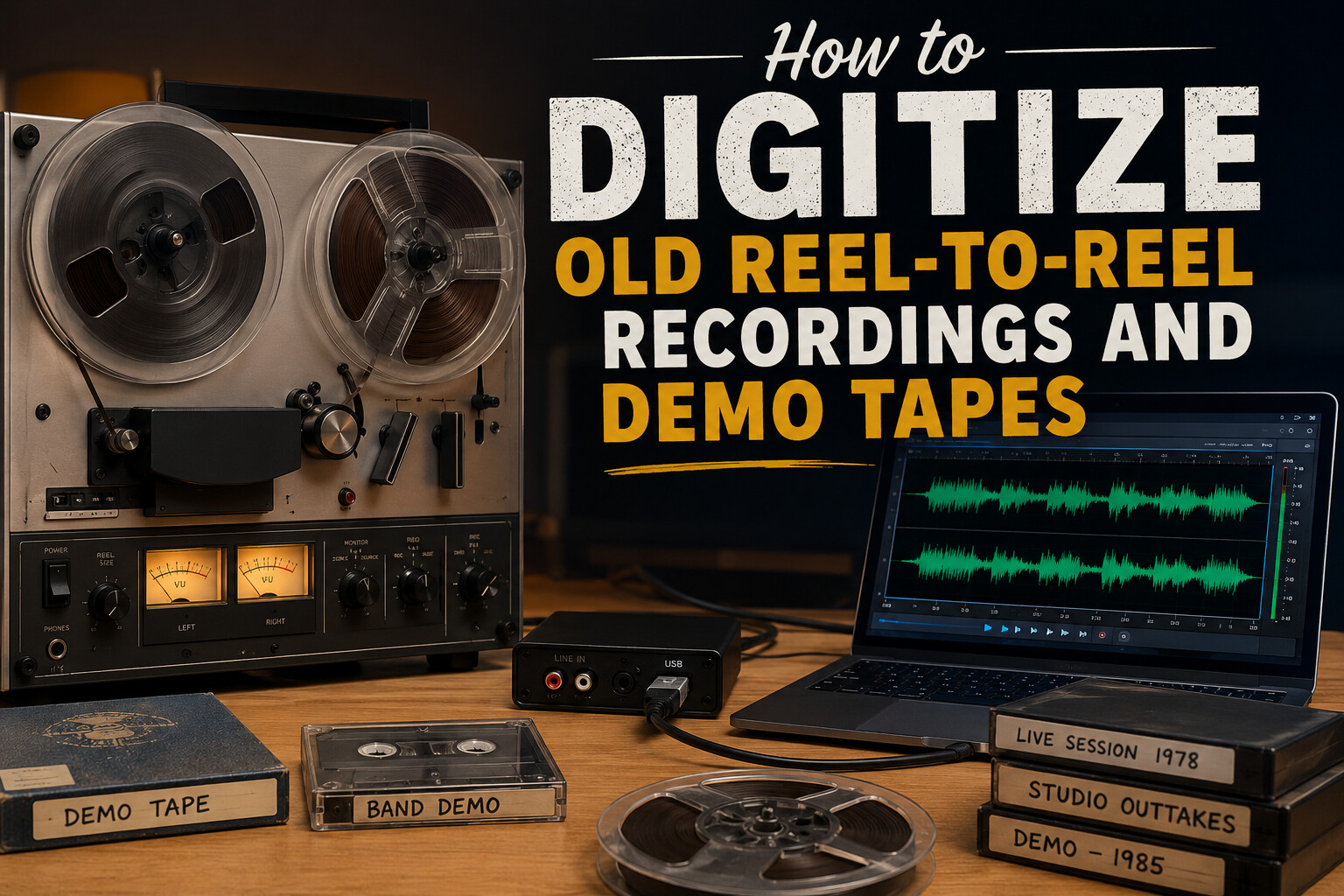
- Reel-to-reel audio and vinyl: often 2 weeks, since playback equipment needs careful setup
These numbers assume a normal-sized personal collection, not a full attic’s worth of boxes.
What Actually Changes the Timeline
A lot of the confusion around turnaround time comes from the fact that no two orders look the same, and a few factors matter more than people expect. The single biggest factor is volume — ten tapes and two hundred tapes are not the same job, even with the same equipment. Condition matters just as much, since a tape that plays cleanly on the first try takes far less time than one with mold, brittle film, or tangled audio that has to be manually repaired before it can even be transferred. Current workload plays a role too, because most media transfer providers work through orders in the sequence they arrive, and busy seasons around the holidays tend to slow everything down. Output choice affects the back end of the process as well, since a simple digital file takes less time to prepare than a project delivered on USB, cloud link, and DVD all at once.
Other things worth keeping in mind:
- Rare or unusual formats may need special equipment, which can add time
- Restoration requests such as color correction or noise reduction extend the timeline
- Multiple formats in one order (tapes, film, and photos together) take longer to coordinate than a single format
Small Projects vs. Large Family Collections
Under 20 Items
A shoebox of photos or a handful of tapes is a fairly quick job for most providers. One to two weeks is typical, assuming nothing needs repair.
A Full Family Archive
Collections spanning decades, with multiple formats mixed together, are a different scale of project. Three to six weeks is a more realistic window, sometimes longer if restoration work is involved.
If you’re not in a rush, breaking a large collection into smaller batches can work in your favor. It lets you get your most important tapes back first — weddings, births, milestone events — while the rest of the collection continues through the process.
How the Process Actually Works Behind the Scenes
Once your items arrive at a facility offering digital transfer services near me, they don’t go straight into a machine. There’s a sequence most reputable providers follow:
- Items are logged and inspected for damage or playback issues
- Tapes, film, or photos are cleaned and prepped
- Each piece is transferred using equipment matched to that format
- Files are reviewed for quality before being finalized
- Output is prepared in whatever format you requested — USB, cloud, or DVD
Skipping steps isn’t really an option if the goal is a usable, watchable result rather than a rushed one.
What You Can Do to Move Things Along Faster
There are a few things on your end that genuinely shorten the process, without cutting corners on quality:
- Label your tapes, film, or photo boxes clearly before sending them in
- Separate anything you know is damaged or unusual so it can be flagged early
- Decide on your output format ahead of time instead of after the transfer is complete
- Send your most time-sensitive items first if you’re working with a large collection
- Ask upfront about current turnaround time rather than assuming a general estimate applies to your order
Rush Orders: Are They Worth It?
Some providers offer expedited service for an added fee, and it can be useful in specific situations.
- A memorial service or funeral coming up in a matter of days
- A wedding slideshow or anniversary event with a fixed date
- A birthday milestone that can’t be moved
Outside of those situations, standard turnaround usually makes more sense. Rushing a large or fragile collection can mean less time for careful cleaning and quality checks along the way.
Common Timing Myths
- “All digitizing takes the same amount of time.” Format, condition, and volume all change the timeline significantly.
- “A bigger company always means faster turnaround.” Larger mail-in services often have bigger backlogs, not shorter ones.
- “If it’s not urgent, there’s no downside to waiting.” Waiting doesn’t pause deterioration — it just narrows your options later.
- “Restoration and basic transfer take the same time.” Restoration work, like stabilizing shaky footage or repairing torn film, adds real time to the process.
Questions Worth Asking Before You Book
- What is the current turnaround time for my specific format and volume?
- Does that estimate change if restoration is needed?
- Can I get part of my collection back sooner if I split the order?
- What happens if something is damaged and needs extra repair mid-process?
A provider who answers these clearly, without vague language, is usually one worth trusting with your originals.
Why Waiting Longer Only Adds Time Later
There’s an uncomfortable truth about old media: the longer it sits, the more likely it is to need extra repair work before it can even be transferred. A tape that plays cleanly today might jam or snap in another year. Film that’s slightly faded now can shift further toward pink or orange with more time. Photos stuck together in albums only get harder to separate safely.
None of that changes overnight, but “I’ll get to it eventually” tends to turn a simple, fast transfer into a longer restoration project down the road.
Finding Digital Transfer Services Near Me You Can Actually Rely On
When you’re comparing digital transfer services near me, turnaround time is only half the picture — you also want a provider who’s upfront about it.
- A realistic estimate given before work starts, not after
- Early communication if your items need special handling
- Clear pricing that isn’t buried in fine print
- The option to drop off items in person and ask questions face-to-face, instead of relying only on mail-in shipping
Local providers also tend to offer something mail-in services can’t: picking up your originals directly instead of waiting on return shipping.
What Happens After Your Project Is Done
Once everything is transferred, you’ll typically get:
- Your original tapes, film, photos, or audio returned to you
- Your digitized files in the format you chose
- The option to request additional copies or formats if needed later
Most people are surprised by how much they’d forgotten was even on those old tapes. That’s part of why so many families end up going back for a second or third batch once the first one is done.
How Seasonal Demand Affects Your Timeline
Turnaround time isn’t fixed all year. Certain months bring a noticeable jump in orders, which pushes standard timelines out even for straightforward projects.
- Late fall through the holidays: the busiest stretch, driven by gift-giving and family gatherings
- Spring: a smaller spike tied to graduations and spring cleaning
- Early summer: wedding season brings a steady rise in film and photo orders
If your timeline lines up with any of these windows, it’s worth starting earlier than you think you need to. A project that would normally take two weeks in a quieter month can stretch closer to a month during peak season simply due to order volume.
What “Digitize Everything” Usually Means in Practice
Few people actually have a single, uniform type of media sitting in storage. Most collections are a mix, and that mix is exactly what determines the overall timeline for a project.
- A dozen VHS tapes from the 1990s
- A stack of photo albums going back further than that
- A few cassette tapes of home recordings
- One or two boxes of loose, unsorted prints
When someone asks how long it takes to “digitize everything,” the honest answer is that it’s really several smaller timelines running at once — one for each format — combined into a single project. Sorting items by type before sending them in, even loosely, gives a much clearer starting point for an accurate estimate.
Planning Around Real Life, Not Just an Estimate
Turnaround time isn’t just a number on a website — it’s something to plan a real event or a real deadline around. If there’s an anniversary, memorial, graduation, or holiday gathering on the calendar, working backward from that date is the safest approach.
- Add a buffer week beyond the quoted estimate for unexpected repairs
- Confirm the date you need items back before, not after, dropping them off
- Ask if partial delivery is possible for time-sensitive footage
Getting Started
If you have media sitting around and you’re wondering how long a project like yours would realistically take, the best next step is simply asking Archive Life Media. Every collection is a little different, and a real estimate based on your actual items is more useful than a general one online.
Reach out through the contact page to get a timeline based on what you actually have, and start the process before those tapes and photos need more work than they do right now.