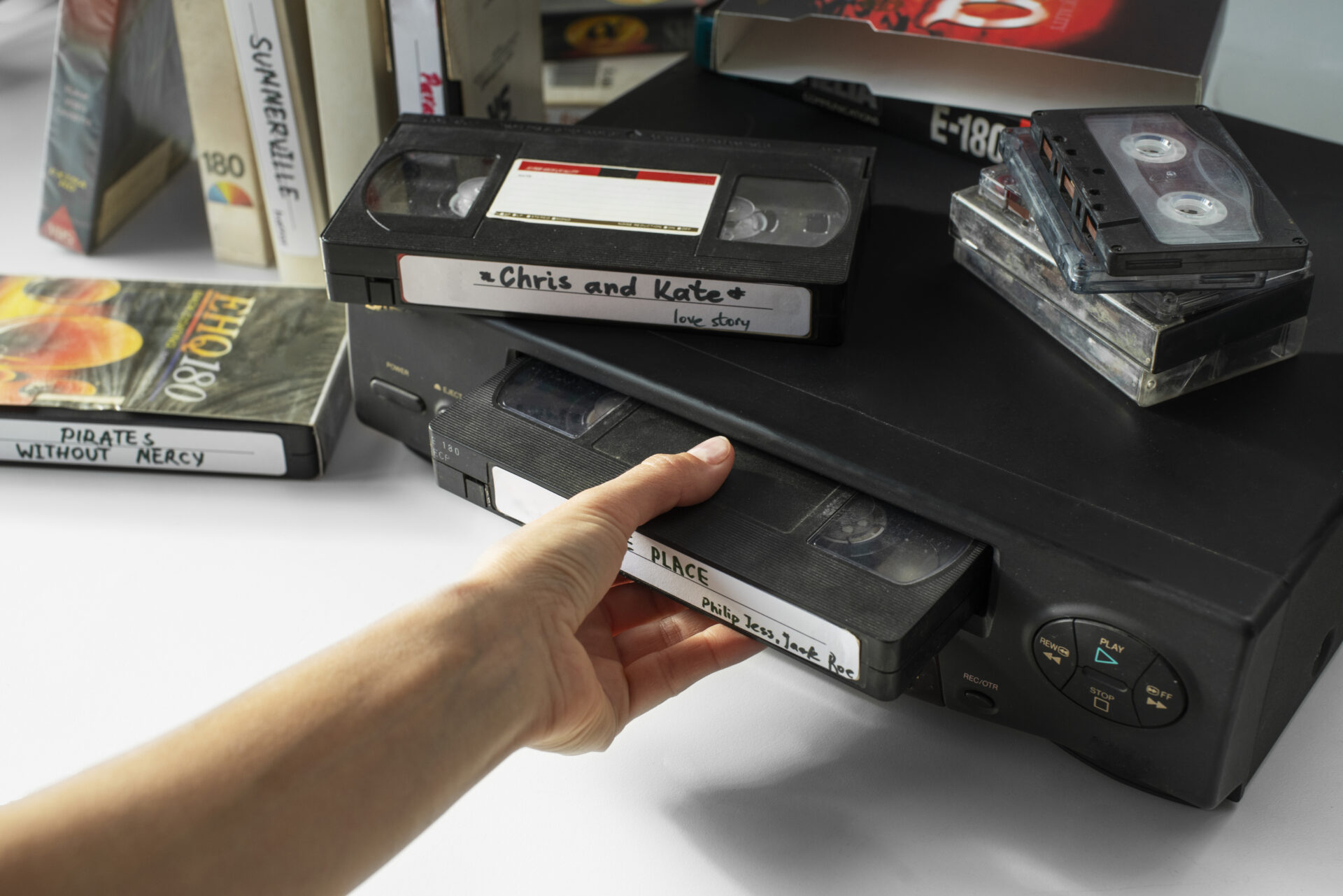
You probably have a box somewhere in your home — a dusty shelf, a storage closet, or the back of a drawer — filled with VHS tapes, film reels, old photo prints, or audio cassettes. These are not just objects. They hold birthdays, anniversaries, first steps, and faces you may never see again. The problem is that the media they are stored on is quietly deteriorating every single year.
This guide walks you through the simplest, most reliable way to preserve those memories for good — using professional digital transfer services. Whether you have a handful of tapes or an entire collection of mixed formats, this is the most stress-free path forward.
Why Your Old Media Cannot Wait Much Longer
Most people assume their tapes and photos are fine because they look okay on the outside. But the reality is different. Magnetic tape degrades at a rate of about 10 to 20 percent per decade, even when stored in ideal conditions. Photographic prints fade. Film reels become brittle. Audio cassettes lose signal strength. The window to save what is on them is not indefinite.
Beyond physical decay, playback equipment is disappearing fast. VCRs, camcorders, and reel-to-reel players are no longer manufactured. When your old player breaks, finding a replacement becomes harder and more expensive each year. Acting sooner rather than later is not just wise — it is necessary.
What Are Digital Transfer Services and How Do They Work?
Digital transfer services convert your physical media — tapes, film, slides, photos, audio recordings — into digital files you can watch, share, and store on modern devices. The process is handled by trained technicians using professional-grade equipment designed to extract the best possible quality from aging media.
Here is what typically happens when you use a professional service:
- Your media is inspected for damage before any transfer begins
- Each format is played back on calibrated, format-specific equipment
- The signal is captured in high resolution and encoded into a modern digital format
- Your original media is returned safely along with your digital files
- Files are delivered via USB, DVD, or secure digital download depending on your preference
When you search for digital transfer services near me, you are not just looking for a shop that can do a quick conversion. You are trusting someone with irreplaceable content. That is why choosing the right provider matters so much.
What Formats Can Be Transferred?
One of the most common questions people have is whether their specific format can be handled. The short answer is yes — professional providers work with a wide variety of legacy formats that most people have at home.
Video Formats
VHS, VHS-C, Betamax, Hi8, Video8, MiniDV, Digital8, and Super VHS are all formats that a quality provider can handle. Many families have a mix of these formats collected over decades, and a professional service can process all of them in a single order.
Film Formats
Super 8, Regular 8, and 16mm film are among the most fragile formats of all. They require frame-by-frame scanning rather than simple playback, which means quality matters enormously here. A skilled technician can restore color, improve brightness, and stabilize footage during the transfer process.
Photos and Slides
35mm slides, negatives, and printed photographs can all be scanned at high resolution. Good providers offer resolutions high enough to allow large-format printing from your digitized images, so you are not just archiving — you are restoring.
Audio Formats
Cassette tapes, reel-to-reel recordings, vinyl records, and even microcassettes can be transferred to MP3, WAV, or FLAC files. This is especially valuable for families who have recordings of loved ones that exist nowhere else.
How to Choose the Right Provider
Not every business offering digital transfer services near me operates at the same level. Some use consumer-grade equipment that produces flat, low-resolution output. Others rush through orders without inspecting media for damage first. Knowing what to look for will save you both money and disappointment.
The most important things to check are equipment quality, turnaround time transparency, how they handle damaged or moldy media, and whether they return your originals. A trustworthy business will answer all of these questions clearly before you hand over anything.
At Archiving Life Media, every order is handled with care from start to finish. We work with a wide range of formats, use professional broadcast-quality capture equipment, and treat each piece of media as the irreplaceable item it is.
What to Expect After Your Transfer Is Complete
Once your media has been digitized, you will receive files that are immediately ready to use. Most people choose to store copies in multiple places — an external hard drive, a cloud service like Google Photos or iCloud, and a backup USB drive. This three-copy strategy ensures your memories are protected even if one storage device fails.
Digital files can be shared with family members anywhere in the world within minutes. They can be edited, trimmed, and compiled into highlight reels. They can be played on any modern device without special equipment. The originals remain as physical keepsakes, but your memories are now safe in a format built to last.
How Archiving Life Media Makes the Process Simple
At Archiving Life Media, we built our process around one goal: making it as easy as possible for families to preserve their history without stress. You do not need to know anything about formats, file types, or technical specifications. You just bring us your media and we handle everything else.
We accept walk-in drop-offs and also offer mail-in options for clients who are not able to visit in person. Every order includes a condition report on your media, secure handling throughout the process, and quality-checked output before anything is delivered to you.
If you have been putting this off because it seemed complicated or expensive, we would like to show you that it does not have to be either. When people search for digital transfer services near me and find Archiving Life Media, they consistently tell us the same thing: they wish they had done it sooner.
Ready to Preserve Your Memories?
Your old tapes and photos will not wait forever. The sooner they are digitized, the better the quality of what you get back.
Book your order with Archiving Life Media today — click here to get started and we will take care of the rest.
No technical knowledge needed. No complicated forms. Just your memories, handled with care.
Frequently Asked Questions
1. How long does the digital transfer process take?
Turnaround time depends on the number of items you bring in and the formats involved. Most standard orders are completed within 5 to 10 business days. Rush options are available if you need files sooner. At Archiving Life Media, we give you a realistic estimate at the time of drop-off so there are no surprises.
2. Will my original tapes and media be returned to me?
Yes, always. Your originals are returned to you along with your digital files. We never discard physical media. Here is what we return with every completed order:
- All original tapes, film reels, slides, or audio media in the same condition they arrived
- Your digital files on your chosen delivery format — USB, DVD, or digital download
- A condition report noting any damage or issues observed during handling
- Clear file naming so you can match each tape or reel to its digital counterpart
3. What if my tapes are damaged or moldy?
Damaged media is more common than people expect, and it does not automatically mean your content is lost. We assess each item before transfer and let you know what is recoverable. Mold, moisture damage, and sticky shed syndrome can often be treated before playback. We are always honest about what can and cannot be saved so you can make informed decisions.
4. What digital file format will my media be converted to?
For video, we deliver MP4 files as standard, which play on virtually every device without any special software. For audio, we offer MP3 and WAV depending on your preference. Photos and slides are delivered as high-resolution JPEG or TIFF files. If you have a specific format requirement, just let us know at the time of your order.
5. How much does a professional digital transfer service cost?
Pricing varies based on format, quantity, and any restoration work involved. Video tape transfers typically range from $15 to $35 per tape, while photo scanning and film transfers are priced based on volume. We provide clear, upfront quotes with no hidden fees. The investment is small compared to the value of what you are preserving — memories that simply cannot be replaced.