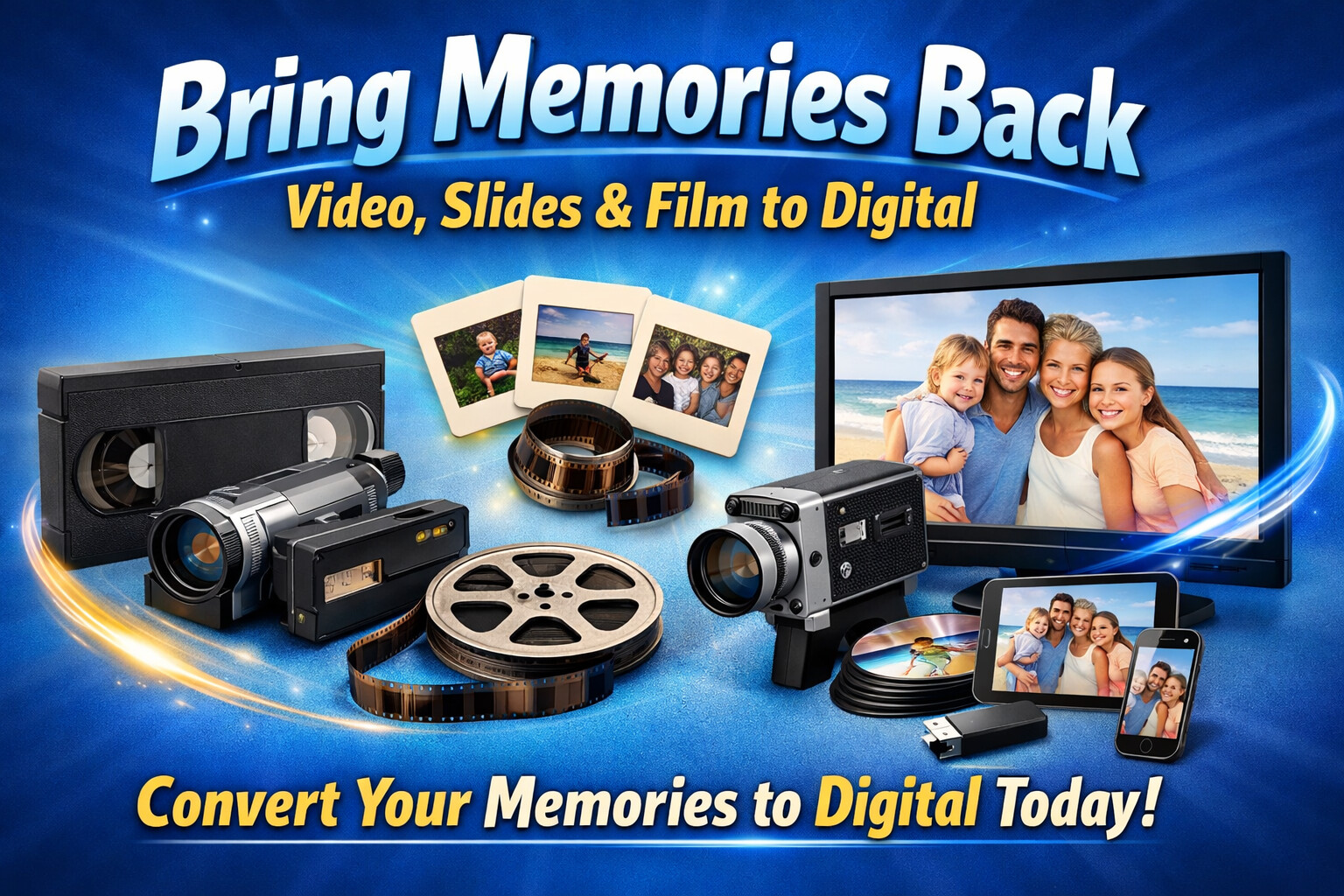
Memories are priceless. They capture birthdays, weddings, family vacations, childhood moments, and special events that we never want to forget. For many families, these memories are stored on old videotapes, photo slides, and film reels that are sitting in boxes, drawers, or storage rooms. Over time, these formats can fade, degrade, or even become impossible to play as technology changes.
That’s where digital conversion comes in. By converting your old media into digital formats, you can protect your memories, share them easily, and keep them safe for future generations. At archieving life media, we believe every memory deserves to be preserved and enjoyed again.
In this blog, we’ll explain what videotape, slide, and film conversion is, why it matters, and how you can bring your old memories back to life.
Why Old Media Needs to Be Converted
Many people don’t realize that old media formats are slowly deteriorating. Even if they are stored carefully, time naturally affects them.
Here are some common issues with old media formats:
- Physical Damage
Videotapes and film reels can stretch, crack, or break over time. Slides may fade or get scratched. - Loss of Playback Devices
Many homes no longer have VHS players, slide projectors, or film projectors. Even if you still own one, it may stop working soon. - Quality Fading
Colors fade, sound becomes distorted, and images lose clarity as the years pass. - Risk of Permanent Loss
Floods, heat, dust, or simple aging can permanently destroy irreplaceable memories.
Digital conversion solves all these problems by preserving your media in a modern format that can be viewed anytime on computers, phones, TVs, and cloud storage.
What Is Digital Conversion?
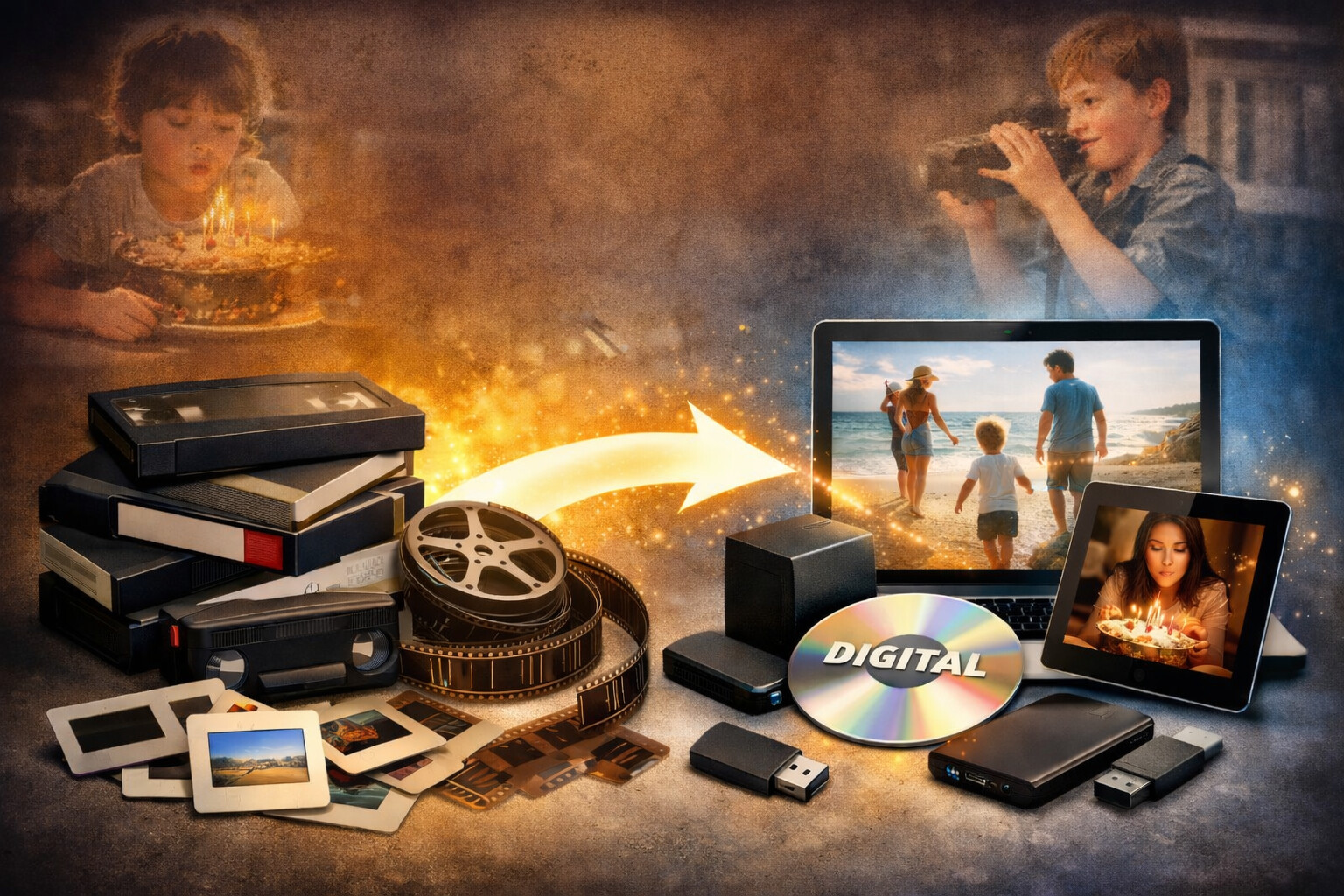
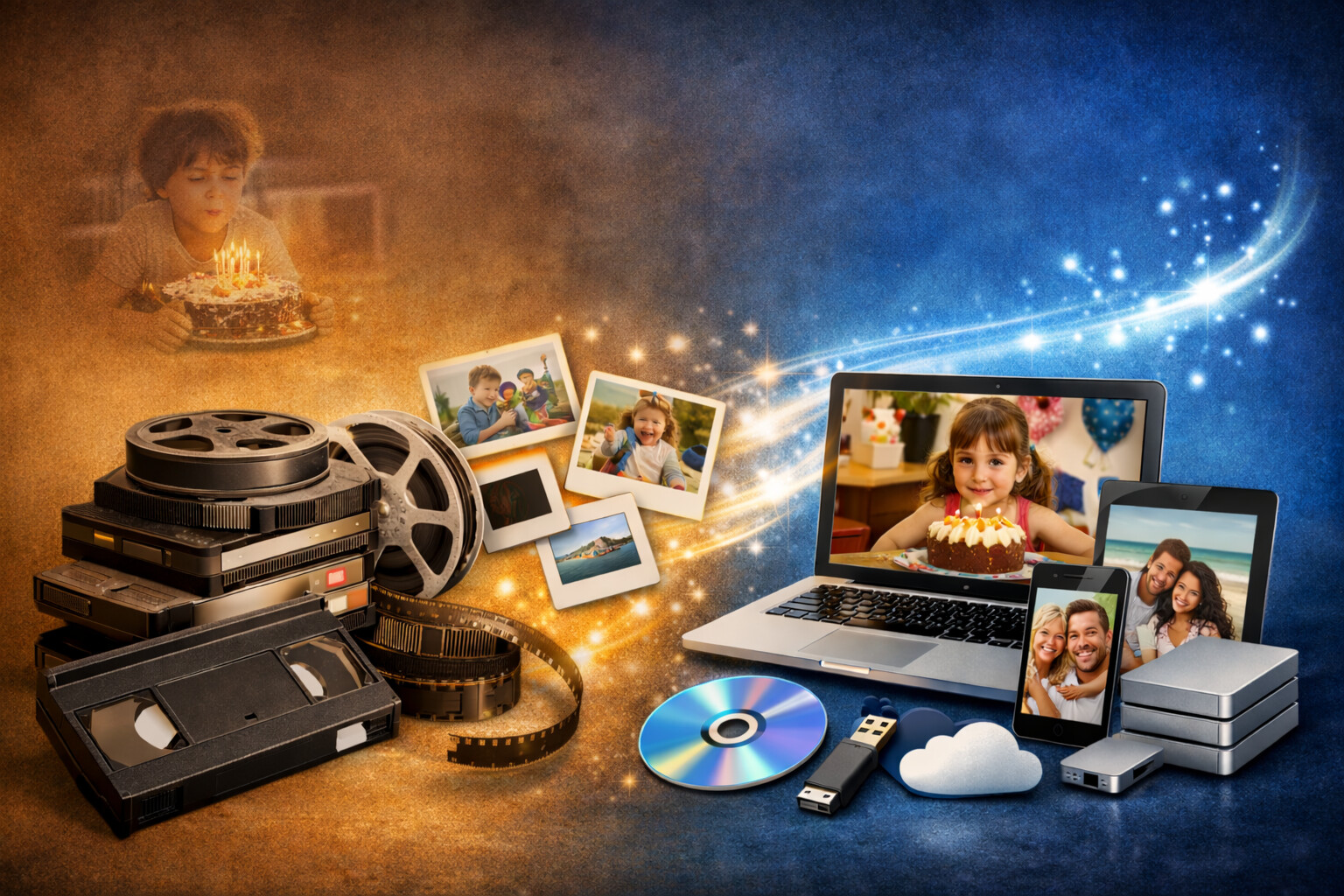
Digital conversion is the process of transferring analog media—such as videotapes, slides, and film reels—into digital files. These files can then be saved on USB drives, hard drives, DVDs, or cloud storage.
Once converted, your memories become:
- Easy to watch
- Simple to share with family
- Safe from physical damage
- Compatible with modern devices
At archieving life media, the goal is to carefully convert your media while maintaining the best possible quality.
Videotape to Digital Conversion
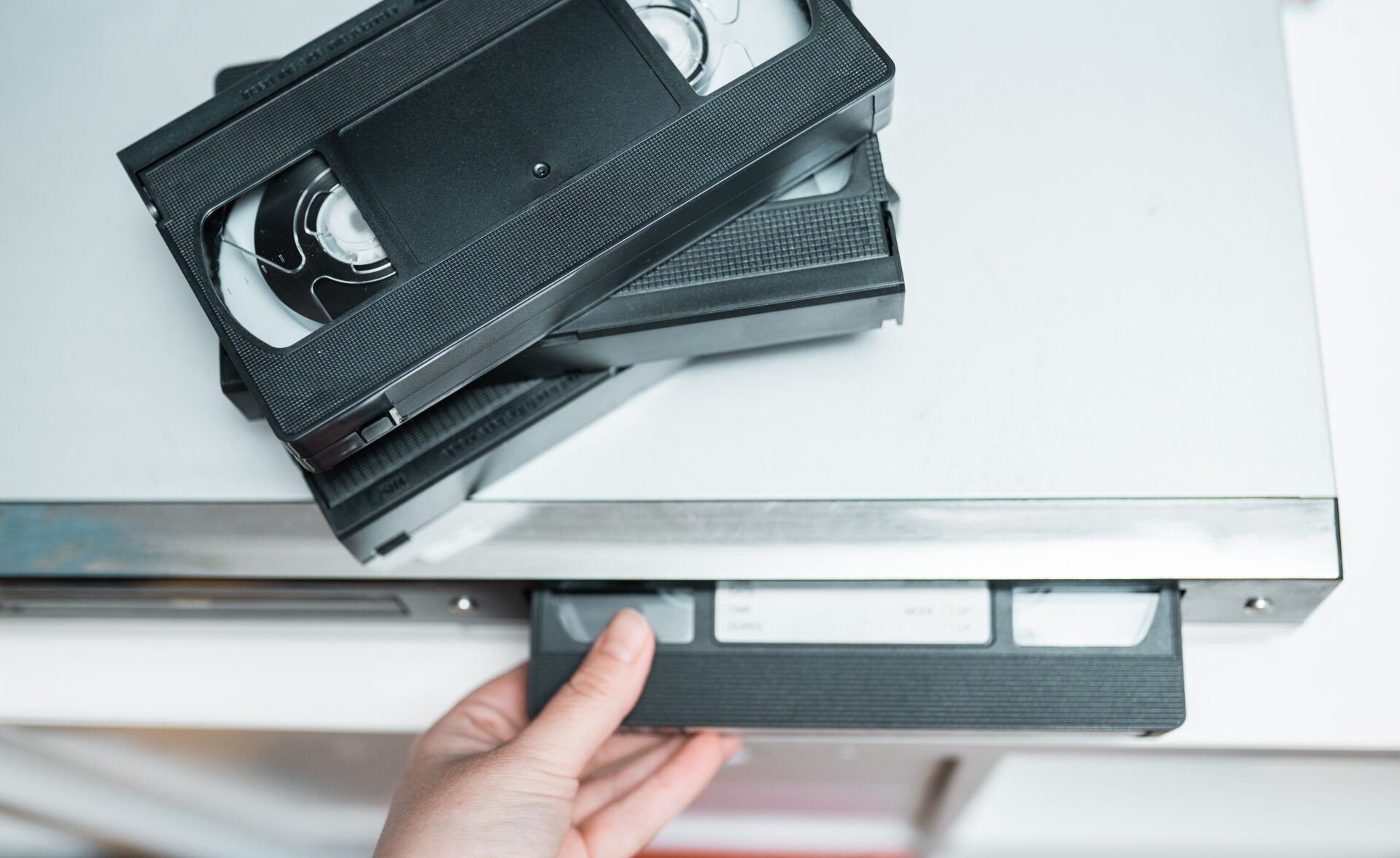
Videotapes were extremely popular from the 1980s through the early 2000s. Many families recorded important moments using formats like VHS, MiniDV, Hi8, and Video8.
However, videotapes do not last forever.
Common Problems With Old Videotapes
- Tape deterioration
- Mold growth
- Audio and video distortion
- Broken cassette shells
Benefits of Converting Videotapes to Digital
When videotapes are converted to digital files, you can:
- Watch videos on modern devices
- Share them with family members worldwide
- Edit or create highlight videos
- Preserve them permanently
Many people are surprised by how emotional it is to see old family videos again after years of being unable to watch them. This is one of the reasons why film transfer services have become so important—because they allow families to relive moments that were once locked away on old tapes and film formats.
Slides to Digital Conversion
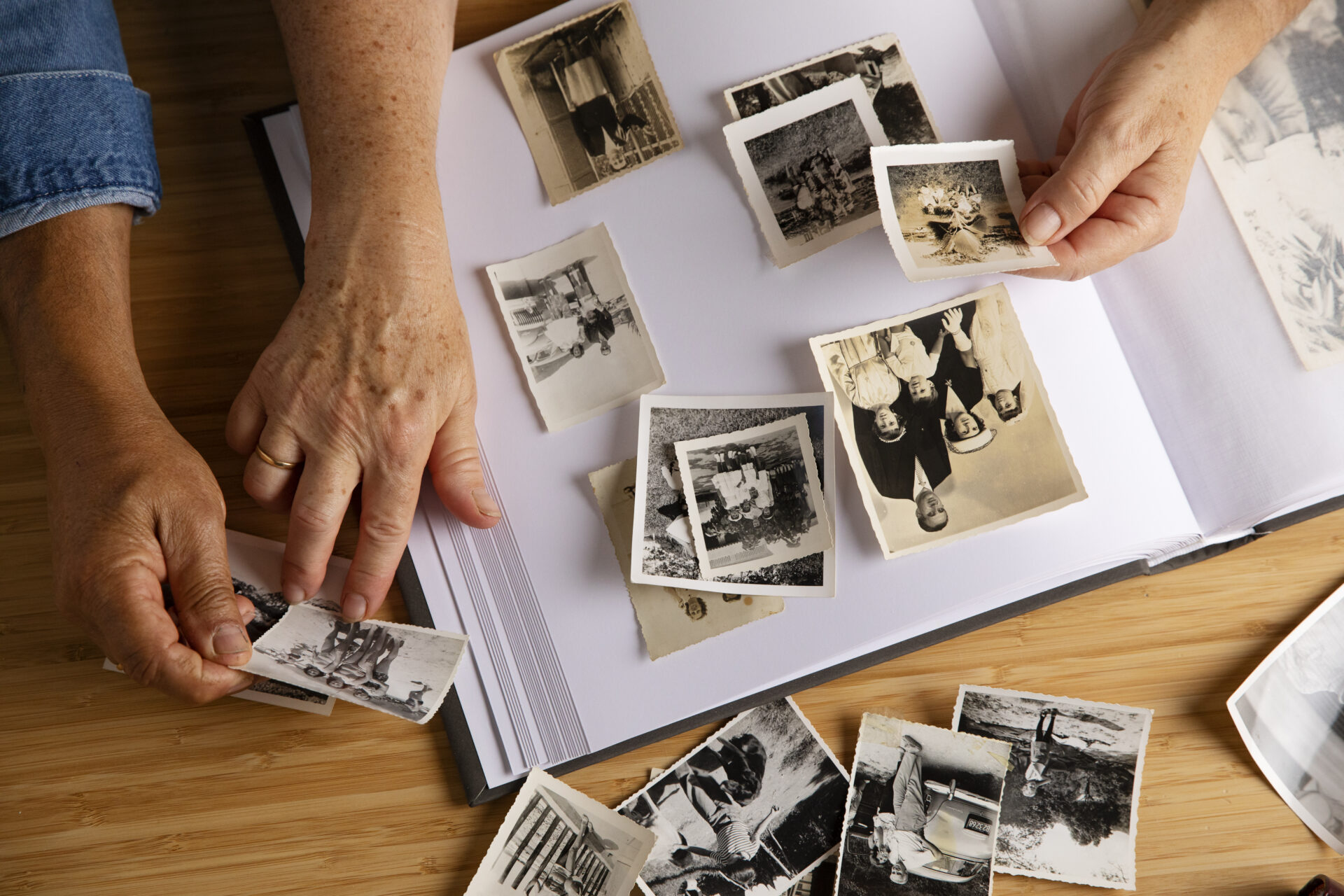
Photo slides were once a popular way to store and display photographs. Families would gather around a projector and watch their memories on the wall.
But today, most slide projectors are no longer used, and slides often sit forgotten in storage boxes.
Why Convert Slides?
Slides are very delicate and can easily fade or become damaged. Converting them to digital format allows you to:
- Restore color and brightness
- Organize photos easily
- Share them on social media
- Print new photo albums
- Keep them safe for generations
At archieving life media, slides are handled carefully during the scanning process to maintain image quality and detail.
Film Reel to Digital Conversion
Film reels are one of the oldest ways people recorded home movies. Formats such as 8mm and Super 8 were widely used to capture family events decades ago.
These films are extremely valuable because they often contain some of the earliest family memories.
Challenges With Film Reels
Film reels can suffer from:
- Shrinking or warping
- Color fading
- Dust and scratches
- Fragility
Many people also don’t have a working projector anymore.
Why Film Conversion Is Important
Digitizing film reels allows you to:
- Watch historic family footage again
- Preserve rare moments
- Share memories with younger generations
- Protect fragile film from further damage
Converting film is one of the best ways to save memories that might otherwise be lost forever.
The Emotional Value of Preserving Memories
Digital conversion is not just about technology—it’s about reconnecting with your past.
Many families rediscover moments they forgot about, such as:
- Children’s first steps
- Grandparents’ laughter
- Old holiday celebrations
- School events
- Family reunions
Seeing these memories again can be incredibly meaningful. It helps families stay connected across generations.
That’s why archieving life media focuses not just on conversion, but on preserving the emotions and stories behind every recording.
Why Choose Professional Conversion Services
While some people attempt to convert media themselves, it can be difficult without the right equipment and expertise.
Here are some reasons why professional services are helpful:
1. Proper Equipment
Professional tools ensure better quality and safer handling of your media.
2. Media Protection
Old tapes and films are fragile. Professionals know how to handle them carefully.
3. Higher Quality Results
Color correction, stabilization, and audio improvements can make a big difference.
4. Time-Saving
Conversion can take hours or even days if done at home.
With archieving life media, the focus is on providing a reliable and simple process so you can enjoy your memories without the stress.
What Happens During the Conversion Process
Many people wonder what happens after they submit their tapes, slides, or film.
Here is a simple overview of the process:
- Media Inspection
Your tapes, slides, or film are checked for damage. - Cleaning and Preparation
Dust and minor issues are addressed before conversion. - Digital Transfer
Your media is carefully converted into digital files. - Quality Check
The digital files are reviewed to ensure they look and sound good. - Delivery
You receive your memories in digital format, often on USB, DVD, or cloud storage.
The goal is to preserve your memories exactly as they were—while making them easier to enjoy today.
How Digital Memories Can Be Used Today
Once your media is digitized, you can do so much more with it.
For example:
- Create family documentaries
- Share clips on social media
- Make anniversary or birthday videos
- Store backups in the cloud
- Send copies to relatives
This is one of the biggest advantages of working with archieving life media—your memories become part of your daily digital life.
Tips for Protecting Your Media Before Conversion
If you still have old tapes, slides, or film at home, here are some helpful tips:
- Store them in a cool, dry place
- Avoid direct sunlight
- Keep them away from moisture
- Do not attempt to repair damaged tapes yourself
- Label them if possible
The sooner you convert them, the better the chances of preserving their quality.
Why Now Is the Best Time to Convert
Technology keeps changing, and older formats are becoming harder to access. Waiting too long may result in:
- Media damage
- Loss of playback devices
- Reduced conversion quality
By converting your media now with archieving life media, you ensure your memories are safe and accessible for years to come.
Conclusion
Memories are one of the most valuable things we have. Unfortunately, many of those memories are trapped in outdated formats that are slowly fading away. Videotapes, slides, and film reels hold stories that deserve to be seen, shared, and remembered.
Digital conversion is the best way to protect those moments and make them accessible again. Whether it’s watching childhood videos with your family or rediscovering old photographs from decades ago, the experience can be truly special.
At archieving life media, we are passionate about helping people preserve their memories and bring them back to life through professional digital conversion services.
If you have old tapes, slides, or film sitting in storage, now is the perfect time to save them before they are lost forever.
Contact Us Today Let us help you preserve your memories and turn them into digital treasures you can enjoy anytime.
Follow us on Facebook, Instagram, and Google Business Profile to stay updated, see customer stories, and learn more about how we bring memories back to life.
Frequently Asked Questions (FAQ)
Q: How long does the digital conversion process take?
The time depends on the number of tapes, slides, or film reels you have. Smaller orders may take a few days, while larger collections can take longer. Our goal at archieving life media is to complete conversions as quickly as possible while maintaining high quality.
Q: Will my original media be returned?
Yes, your original tapes, slides, and film reels are returned to you after the conversion process. We treat every item with care and respect because we know how valuable your memories are.
Q: What digital formats will I receive?
Most customers receive their files in easy-to-use digital formats that work on computers, TVs, and smartphones. Files can be delivered on USB drives, DVDs, or digital download depending on your preference.
Q: Is it possible to improve the quality of old videos or photos?
In many cases, yes. Basic enhancements like color correction, brightness adjustments, and stabilization can help improve the appearance of older media during the conversion process.